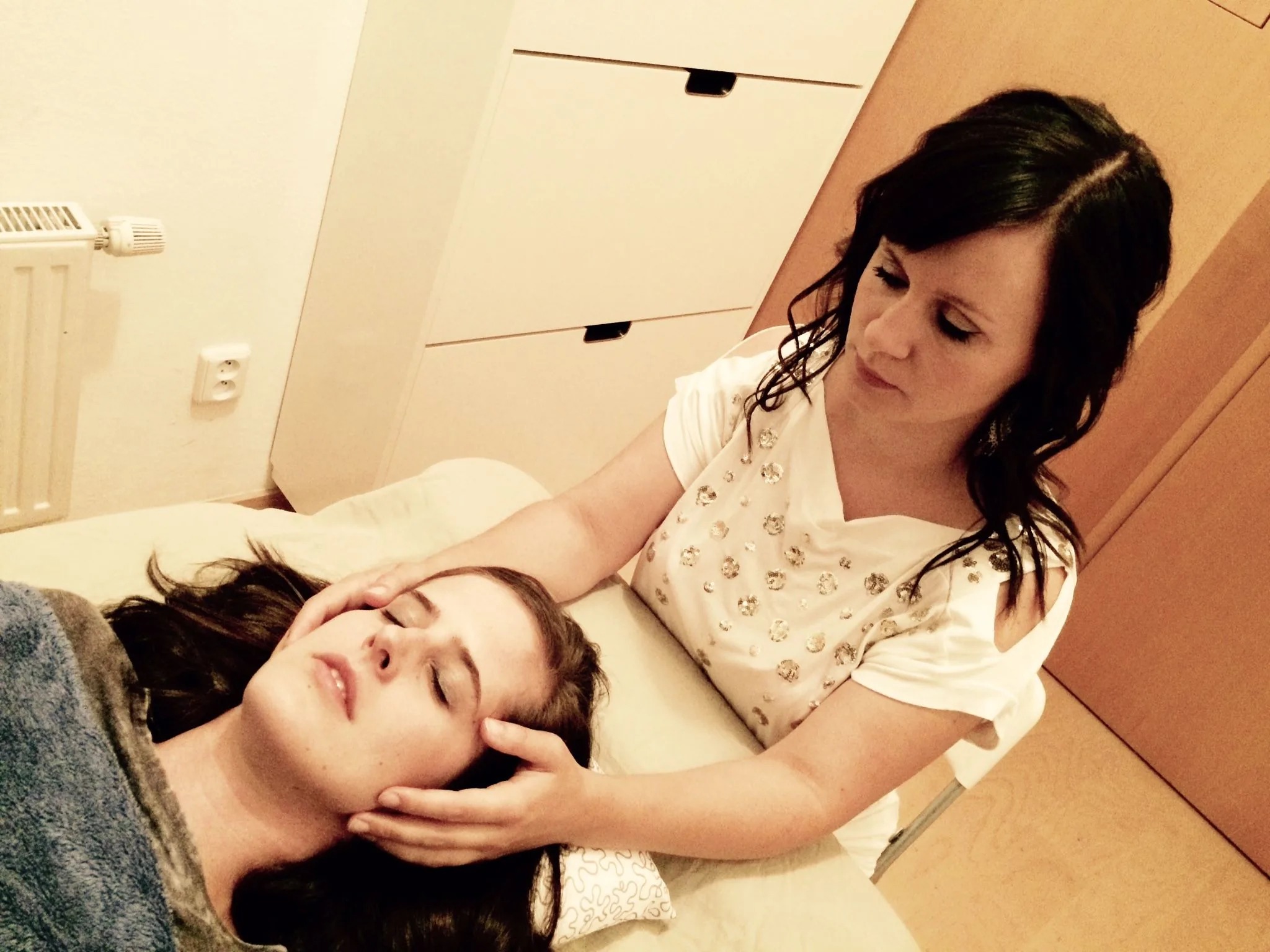
What is CranioSacral Therapy?
CranioSacral Therapy is a gentle, noninvasive, hands-on approach that uses very light contact rather than forceful pressure.1 Practitioners focus on tension patterns involving the body’s connective-tissue network, commonly called fascia, with the goal of helping the body settle into an easier state.1
A simple way to think about it is that the session is designed to reduce strain, not overpower it. Instead of chasing intensity, the work is usually slow, quiet, and responsive. That makes it a familiar choice for people who want support that feels gentle and grounded.
What happens during a session?
Clients generally remain fully clothed during CranioSacral Therapy.1 Sessions usually begin with a conversation about health history, current concerns, comfort preferences, and what you hope the appointment will support.1
From there, gentle contact may be used around the head, neck, back, or other areas related to your concerns.1 The pace is typically slow, and communication stays open throughout the session. Good care includes explaining contact before it happens, checking in about comfort, and adjusting the session if you need more support, a different position, or a pause.1
Consent matters here. You should be able to speak up, ask questions, and help shape the session experience from start to finish.
Why do people seek CranioSacral Therapy?
Many people seek CranioSacral Therapy because they want deep relaxation, stress relief, less overall tension, or support for general well-being.1 Some people also choose it when their body feels overloaded and a gentler session sounds more manageable than aggressive pressure.
Others look at it as a complementary option alongside conventional care for concerns such as headaches, neck discomfort, chronic pain, or similar symptoms.1234 That does not mean it is a cure, and it should not replace medical evaluation when symptoms need diagnosis or treatment.
What does the research say?
The research is still developing. Cleveland Clinic notes that outcomes can vary and ongoing study is needed.1 A randomized trial in people with chronic nonspecific neck pain reported lower pain scores and some functional improvement compared with a sham treatment, while another randomized trial in chronic low back pain compared CranioSacral Therapy with classic massage and reported improvements in disability, pain intensity, and some quality-of-life measures.24
A systematic review and meta-analysis found that some chronic pain studies reported improvements in pain and function, but the included conditions, protocols, and study quality were mixed.3 The careful takeaway is that CranioSacral Therapy may be a helpful complementary approach for some people, but it is not a replacement for medical diagnosis, emergency care, or condition-specific treatment.
What might you feel afterward?
Some people report feeling deeply relaxed after a session.1 Temporary tiredness, dizziness, lightheadedness, or mild discomfort can also happen.1
It is wise to rise slowly after treatment and give yourself a moment before standing or walking away from the table.1 If symptoms feel severe, new, or worsening, that is a reason to contact a qualified healthcare provider.1
Who should speak with a healthcare provider first?
It is worth getting medical guidance first if you have a recent concussion, blood clots, brain swelling, an aneurysm, Chiari malformation, a condition that affects cerebrospinal-fluid pressure or flow, severe symptoms, or other significant medical concerns.1 This is especially important when symptoms are new, escalating, or not yet evaluated.
CranioSacral Therapy can fit best as part of an informed care plan. It should not be used to self-diagnose or to delay appropriate medical attention.
CranioSacral Therapy at New Dimensions Bodywork
At New Dimensions Bodywork, CranioSacral Therapy sessions are personalized, gentle, fully clothed, and centered on comfort and communication. The focus is on meeting you where you are that day, adjusting pace as needed, and creating an experience that feels supportive rather than forceful.
If you want a clearer sense of how this service is offered here, you can read more about the session approach or go directly to booking.
Important note
This article is for general educational purposes and is not a substitute for medical advice, diagnosis, or treatment. Speak with a qualified healthcare provider about symptoms, medical conditions, or whether CranioSacral Therapy is appropriate for you.
Sources
- Cleveland Clinic. Craniosacral Therapy.
- Haller H, Lauche R, Cramer H, et al. Craniosacral Therapy for the Treatment of Chronic Neck Pain: A Randomized Sham-Controlled Trial.
- Haller H, Lauche R, Sundberg T, et al. Craniosacral Therapy for Chronic Pain: A Systematic Review and Meta-Analysis of Randomized Controlled Trials.
- Castro-Sánchez AM, Lara-Palomo IC, Matarán-Peñarrocha GA, et al. Benefits of Craniosacral Therapy in Patients with Chronic Low Back Pain: A Randomized Controlled Trial.